
There has been discussion for years of “rescheduling” cannabis, a regulatory move that would substantially ease federal restrictions on the drug. Now, with one Recent push from the White House To speed up the rescheduling process, we can see that the change has occurred.
Moving cannabis to Schedule III – a less-restrictive classification for drugs – would represent a very significant change in how the federal government treats cannabis research, in that it would officially state that cannabis has medical uses. This historic decision will encourage the largest scientific investment ever in cannabis research and help build some of the strongest evidence of the value of cannabis-based treatments.
However, the move toward Schedule III should be viewed as a transition rather than an endpoint.
How cannabis is regulated today
Cannabis has existed in a complex place in medicine, policy, and public perception for decades.
More than 6 million Americans are registered to use cannabis through state medical programs. Physicians participating in state medical cannabis programs typically “certify” and “recommend” specific cannabis products to certain patients rather than writing traditional prescriptions. Additionally, there are a handful of cannabis-derived and cannabinoid-based medications. Received formal Food and Drug Administration (FDA) approval.
However, since the enactment of the Controlled Substances Act in 1970, cannabis has been classified as a Schedule I substances. This category is associated with the highest level of restriction, including substances such as heroin, MDMA, and LSD.
Under federal law, Schedule I drugs are defined as those with a high potential for abuse and no currently accepted medical use. Given that few cannabis-derived drugs are approved by the FDA, it may seem contradictory that cannabis remains a Schedule I substance. The key point is that federal drug scheduling, FDA drug approval, and state cannabis laws are separate legal and regulatory systems.
Federal law classifies cannabis as a Schedule I drug. Separately, the FDA evaluates and approves individual cannabinoid medications for specific medical conditions. Independently, states may authorize cannabis for medical or adult use under their own laws, even if cannabis is illegal under federal law.
This three-tier regulatory landscape can be confusing for patients, physicians, and the general public alike.
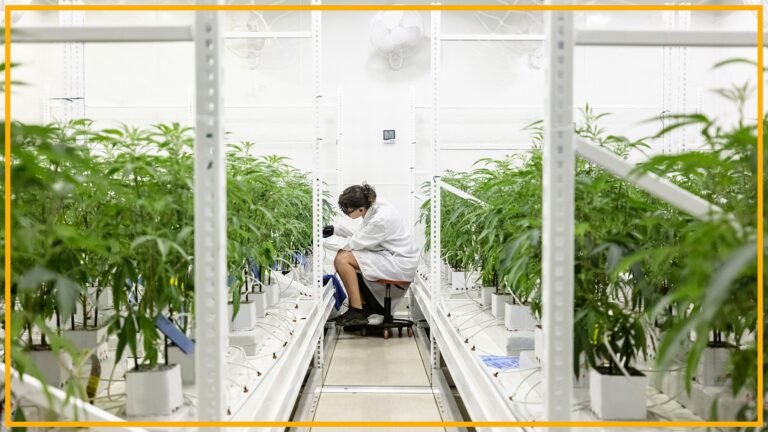
Federal law currently classifies cannabis as a Schedule I drug.
(Image credit: Martin Deja via Getty Images)
Redesignation will be a boon for research
for a few yearsFederal officials have recommended moving cannabis to Schedule III, which includes drugs with approved medical uses that are subject to fewer federal restrictions. Ketamine and anabolic steroids, such as testosterone, are examples. Compared to Schedule I substances, Schedule III drugs are considered to have a lower potential for abuse and can be prescribed for medical uses approved under federal law.
The rescheduling of cannabis would thus create a regulatory environment that is more conducive to research, which could support the development of FDA-approved cannabis-based drugs in the future. Researchers are already exploring cannabinoids as potential treatments for conditions including chronic pain, post-traumatic stress disorder, inflammatory bowel disease and sleep disorders, but available evidence is limited for many uses.
The evidence is limited, because researchers studying cannabis for decades have faced regulatory hurdles that go beyond many other controlled substances.
Compared to research with less-restricted drugs, studies using cannabis often require additional federal, institutional, and local approvals. They have additional requirements regarding the safe storage and handling of cannabis. They require detailed record-keeping to document how research materials are obtained, stored, and used, as well as Drug Enforcement Administration registration for the principal investigator conducting Schedule I research.
Additionally, federal restrictions have historically limited researchers’ access to cannabis products that mirror those people use regularly, such as commercially available flower, vape products, and edible formulations.
This regulatory burden has historically discouraged some universities, health care systems, and funding organizations from investing in cannabis research. These obstacles have made cannabis studies slower, more expensive, and smaller than studies conducted with more loosely controlled drugs.
Federal restrictions have historically limited researchers’ access to cannabis products that people use regularly, such as commercially available flower, vape products, and edible formulations.
Moving cannabis to Schedule III would help reduce these barriers, opening up opportunities for more universities and health care systems Conduct much-needed clinical studies for medical cannabis. This could help researchers conduct the larger, more rigorous clinical trials needed to determine which therapies are truly safe and effective — and which are not.
Such gold-standard studies will better evaluate the potential benefits and risks of cannabis, as well as its effects for specific medical conditions and in appropriate doses for each. In turn, this evidence may help reduce the stigma associated with cannabis use.
What will not be accomplished by rescheduling
The redefinition of cannabis will not automatically make cannabis more accessible to patients or immediately establish where cannabis is beneficial, what dosage is most appropriate or which patients are most likely to benefit.
It would not automatically convert existing state cannabis programs to the traditional prescription model used for most Schedule III drugs. And it won’t immediately resolve the complexities surrounding state medical cannabis programs, which operate outside the traditional FDA-approved drug pathway.
Unlike most prescription drugs, medical cannabis is a broad term that includes hundreds of products that vary in cannabinoid content, formulation, dosage, and route of administration. Most of those products have not been approved by the FDA, so rescheduling will not automatically put them into the traditional prescription drug system or immediately resolve many of them. Patients face financial and access barriers When attempting to use them.
Without robust follow-up research, rescheduling alone will do little to resolve the uncertainty surrounding many cannabis products.
In short, the biggest benefit of moving cannabis to Schedule III won’t be the policy change itself; This will be an opportunity to build a stronger evidence base for cannabis science and medicine. Policymakers may open the door to Schedule III, but researchers, practitioners, and regulatory agencies will determine whether this opportunity will truly lead to appropriate and meaningful advances in cannabis science and medicine.
The significance of the redesign will be measured not by how quickly it changes patients’ access to cannabis, but by whether it helps build the scientific foundation needed to guide responsible medical use.
This article is for informational purposes only and is not intended to provide medical advice.
Opinion On Live Science you get information on the most important science issues that affect you and the world around you today, written by experts and leading scientists in their fields.