
A new study led by Stanford has provided the strongest evidence yet for why some marine animals survived Earth’s largest mass extinction while many others disappeared forever. The findings not only explain how modern marine ecosystems formed, but also how today’s warming oceans may affect marine life.
About 252 million years ago, the Permian–Triassic extinction event, often called the “Great Dying”, wiped out approximately 96% of marine species and 70% of land animals. Yet the destruction was not evenly distributed across the tree of life.
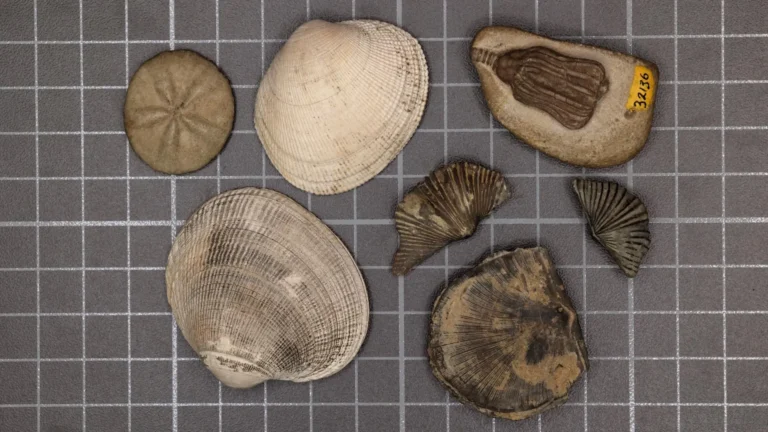
Before the extinction, the ancient sea floor was dominated for about 280 million years by brachiopods, which resembled sea lilies (crinoids) and other bottom-dwelling animals, as well as clams. After the disaster, the groups that had once been prominent almost disappeared. In contrast, only half of the mollusks, including clams and snails, disappeared. The survivors, along with fishes and echinoderms such as starfish and sea urchins, came to dominate Earth’s oceans, a pattern that continues today.
Published on July 6 Proceedings of the National Academy of SciencesThe study is the first to combine biological data from both groups that were destroyed and those that survived the extinction. The results point to one big difference: Species whose metabolisms were less able to deal with warm, oxygen-depleted waters had the highest extinction rates.
Those harsh oceanic conditions that developed after massive volcanic eruptions pumped huge amounts of carbon dioxide and methane into the atmosphere, warming the planet dramatically.
“With this study, we essentially wanted to solve the mystery of why, when you go to the beach, you collect clams and snail shells instead of brachiopods,” said lead study author Jose Andres Marquez, a former PhD student in Eric Anders Sperling’s lab at Stanford. “Our findings show that, across different organism groups, those more sensitive to increases in water temperatures and decreases in oxygen availability went extinct at much higher rates.”
Ancient extinction provides a modern climate warning
According to the researchers, this work also has important implications for the present. Environmental conditions before the Great Dying resembled the relatively cool, oxygen-rich oceans that existed for millions of years before human activities rapidly changed Earth’s climate through fossil fuel emissions.
“This study is really the last nail in the coffin of what caused the Permian-Triassic mass extinction,” said Sperling, senior author of the study and associate professor of Earth and planetary sciences at the Stanford Doerr School of Sustainability. “The largest mass extinction of all time began on a world similar to today’s with a relatively cold, relatively well-oxygenated ocean, and then a massive injection of carbon dioxide into the Earth system. Understanding how the Earth and Earth’s biota responded at that time can tell us what was going to happen.”
Why did metabolism determine survival?
Metabolism includes all the chemical processes that allow living organisms to produce energy and survive. During the Paleozoic Era, which ended with the Great Dying, many marine animals were slow-moving, bottom-dwelling filter feeders, including brachiopods, crinoids (related to sea lilies, starfish), and some corals and sea anemones.
The marine animals that emerged thereafter were generally much more active. Fish, mobile mollusks, sea urchins and bivalves such as clams, oysters and mussels all require speed and in many cases fast metabolisms to support a predatory lifestyle.
Compared to brachiopods, bivalves require more energy due to their larger bodies and muscular “legs” that allow them to burrow and crawl.
“That’s why we eat clam chowder and we don’t eat brachiopod chowder,” Sperling said. “Brachiopods have almost no meat.”
Before the extinction, brachiopods greatly outnumbered bivalves. Today, only about 400 brachiopod species remain, while an estimated 10,000 to 15,000 species of bivalves exist.
Sperling compared this dramatic ecological shift to the extinction of non-avian dinosaurs 65 million years ago, “where mammals essentially took over and then never gave up that niche to reptiles.”
Reconstructing an ancient ocean crisis
The research expands on a 2018 Princeton and Stanford study, which concluded that warming oceans and lack of oxygen were likely responsible for the Great Dying. However, earlier work had largely relied on physiological data collected from modern marine species, particularly economically important fishes and crustaceans, leaving large gaps in knowledge about the animals that were actually most affected.
“In our new study, we filled this gap about the physiology of Paleozoic organisms to see if we can explain not only the biogeography of extinctions, but also the taxonomic selectivity of extinctions,” Sperling said.
To bridge that gap, the team conducted years of fieldwork, which included collecting living brachiopods in the San Juan Islands of Washington state, where they remain relatively common. The researchers collected a wide range of marine animals representing both ancient and modern marine ecosystems.
At field stations and Stanford laboratories, scientists measured how much oxygen each organism consumed under different water temperatures. As the water warms, metabolic activity speeds up, increasing the animal’s demand for oxygen.
Experiments showed that Paleozoic animals could survive in lower oxygen conditions than many modern species. However, once the temperature increased, their slow metabolism could no longer continue. Their oxygen demand increased much faster than that of modern marine animals.
According to the researchers, differences in body composition help explain the results. More active modern species require more oxygen under normal conditions, but they also have the muscles and gills needed to handle increased oxygen demand during warming.
“Warming and lack of oxygen are the major factors,” Sperling said.
Other studies have also identified ocean acidification, which makes seawater more acidic due to carbon dioxide, as another stressor because it makes rock formation more difficult. Sperling said the new findings suggest that acidification contributed to the extinction, but that it was far less significant than warming and oxygen depletion.
Lessons for today’s oceans
The Stanford team plans to expand their research to additional groups of marine animals to better understand how warming, oxygen loss, and acidification interact, especially as all three are becoming more severe in today’s oceans.
Researchers warn that history could repeat itself if modern marine species face increasingly warm, oxygen-poor waters.
“The bad news is that we are on track to reach Permian-Triassic levels of warming under the worst-case projections,” Sperling said. Temperatures rose by 8–12 °C over the thousands of years that caused the Great Dying, and today, in just 100–200 years, temperatures by 2100 are projected to be 1.5–4 °C warmer than pre-industrial times. “But the good news is, we’re still at the point where we can change things and do something about it.”
Funding was provided by the US National Science Foundation, NASA, the Paleontological Association, and the Stanford Woods Institute for the Environment.