

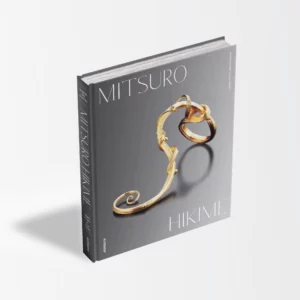
Last month, we attended the launch of Kumiko Kihara and Elsa Tierney’s compelling and beautifully presented new book “Mitsuro Hikime” and we were absolutely thrilled to play a very small role in the event by showcasing three of the amazing Japanese, Meiji-era metalworks featured in the publication.
As always with our articles, you can click on any stock image for a closer look.
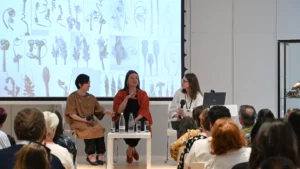
The evening, which took place at the Goldsmiths Center here in London, saw Kumiko and Elsa introduce Mitsuro Hikim and discuss the fascinating journey the co-authors embarked on to write the book.
Mitsuro Hikime is a traditional Japanese wax-sculpture technique that uses the natural properties of wax to create elegant, organic forms cast in metal for jewelery and sculpture. The process involves creating a special wax recipe, heating it, and then repeatedly pulling, stretching, and twisting to create natural, flowing lines. “Mitsuro” means “honey wax” and “hikime” translates to “drawn lines”.
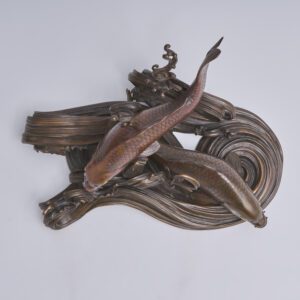
These textured wax forms are then used in lost wax casting to create beautiful jewelery and sculptures and each piece is naturally unique due to the organic behavior of the wax. It is impossible to repeat the same pattern twice.
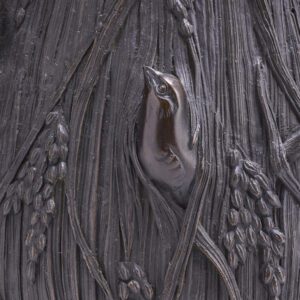
Last year, while researching the book, Kumiko and Elsa visited our Islington galleries after discovering a pair of vases on our website that were created using the practice. During his visit, we found several pieces that were made using the technique.
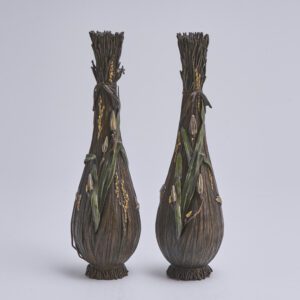
The book explores the history and cultural significance of Mitsuro Hikime and provides first-hand information about the process. Featuring detailed techniques, an artisan approach, and striking examples, (including some pieces from our collection of Meiji-era metalwork) it serves as both a practical guide and a tribute to this enduring art.
You can find more information about Mitsuro Hikime click here Or on the image below.
We hope you found this short-read article interesting. You can find over 150 blogs and stories inspired by our collection of Chinese and Japanese fine art and antiques click here.
You can also browse over 30 pages of exquisite Meiji-era metalwork click here.