
Posted on 15 February 2017
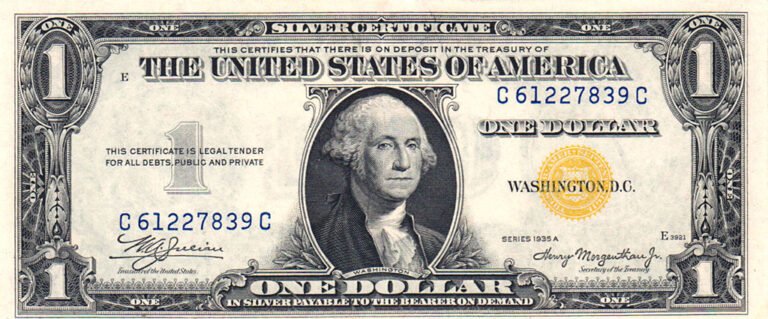
Forms of currency have come and gone throughout the history of countries around the world, from the franc to the euro and from simple gold pieces to standard silver coins. The US is a relatively young nation (240 years old) but its currencies have changed hands several times since its founding. One currency that has become extinct in ancient times is the silver certificate, whose circulation began in 1878.
A Brief History of Silver Certificates
Silver certificates were created in response to the Silver Movement (demonetized silver) by American citizens upset by the Fourth Coinage Act of 1873, which aimed to eliminate bimetallic currency by directly imposing the gold standard.
In 1875, businesses began investing in silver in an effort to restore the bimetallic standard. Congressional representatives from silver-rich states began lobbying to preserve one of the main means of maintaining economic prosperity for their state’s citizens. On February 28, 1878, an agreement was reached with the Bland–Allison Act, which required the U.S. Treasury to purchase a minimum amount of silver and put it into circulation in the form of silver dollars, now known as silver certificates.
The first silver certificates were issued into circulation in several denominations ranging from $10 to $1,000. Financial institutions found them convenient to hold compared to coins, but they were not widely accepted in all transactions.
The Bland-Allison Act made silver certificates receivable for taxes, public dues, and customs, but were not valid for individual, private transactions. The National Banking Act, signed on July 12, 1882, eased some of these restrictions by authorizing them to be included in the legal reserves of national banks and later converted into denominations of $5 or less under a separate act in 1886.
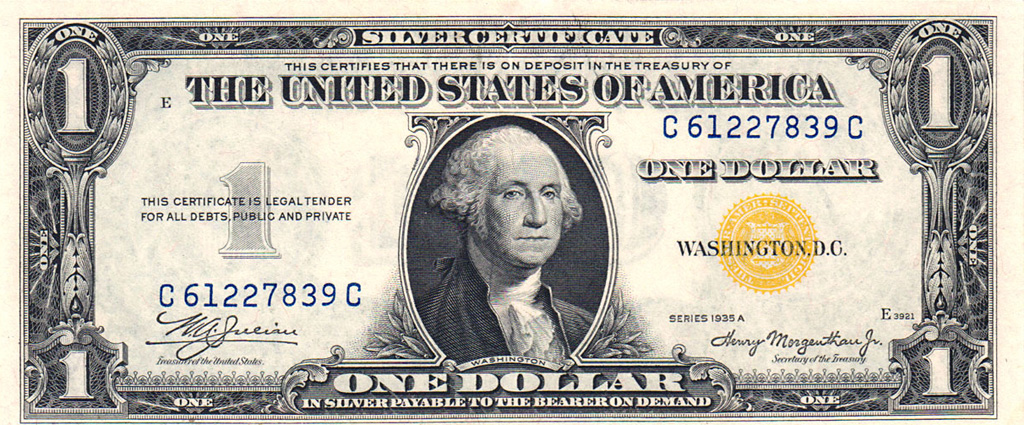 In May 1927, Treasury Secretary Andrew W. Mellon and a committee recommended a reduction in the size and redesign of U.S. banknotes, and on July 10, 1929, new, smaller silver certificates were issued. The outbreak of World War II saw changes in silver certificates and their denominations. Demand for silver bullion increased steadily during the three decades following the Silver Purchase Act of 1934.
The Silver Purchase Act of 1934 and similar acts were later repealed and executive orders were issued by President John F. Kennedy regarding the authority of the Secretary of the Treasury and the valuation of silver certificates. This act led to silver certificates being removed from circulation. By 1964, silver certificates became obsolete and since 1968 have only been redeemable into Federal Reserve Notes, although they are still considered legal tender.
Appraise Your Rare Silver Certificates with Liberty Coins and Currency
Do you have any silver certificates and don’t know what to do with them? Bring them to Liberty Coin & Currency where we can appraise the value of your silver certificates, rare coins, currency, jewelry, gold, silver and more.
Liberty Coin & Currency is a member of the Numismatic Guaranty Corporation (NGC), one of the top authentication services in the US. We are also members of The American Numismatist Association (ANA), Certified Acceptance Corporation (CAC), and the Pacific Northwest Numismatic Association (PNNA). For nearly two decades, we have provided customers with honest, upfront, friendly advice and free appraisals without pressuring you to sell your valuables.
Contact us today to get yours silver certificateCurrency or jewelery was appraised and an accurate assessment of their value was obtained.