
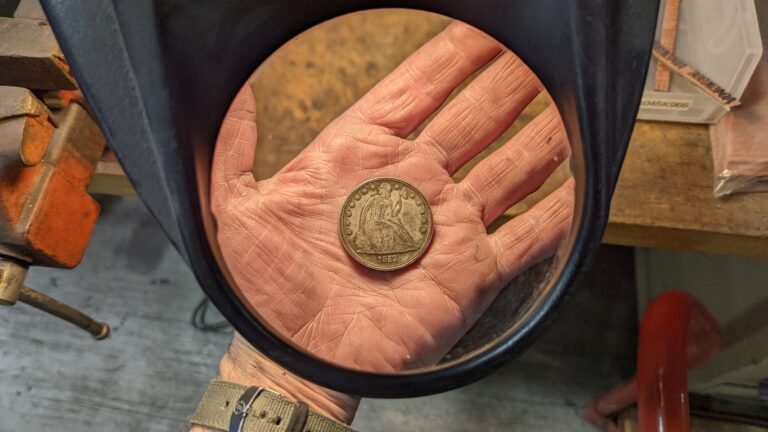
One of the questions coin dealers have is frequently Asked Is: “How do you tell if a coin is real?” Unfortunately, there are many unscrupulous people who will take advantage of inexperienced coin collectors, and Counterfeiting is a real problem In this industry. In this blog we will give you some tips to determine whether a coin is fake or genuine.
Determining whether a coin is counterfeit or not
To spot a counterfeit, you must have a detailed description of the coin’s actual specifications, including size, diameter, thickness, weight, and metal composition. You can find these specifications online. Our recommended websites would be NGC Or pcgs. Once you know what you are looking for, you can determine whether the coins match their specifications.
A quick test that anyone can do to determine whether a coin is counterfeit or not is to weigh it. Most governments use extremely precise manufacturing methods to mint coins, so the coin’s weight must match its listed mint weight. A coin should remain very close to its known weight even after wear and tear over time. Use a sensitive scale that weighs in grams and has an accuracy of within 0.01 gram. If your coin has an odd weight, it is probably a counterfeit. If a coin is very worn, its weight will not be correct, but it will not be 20% lighter either.
You can also measure the diameter and thickness of the coin with a high-precision caliper. If the measurement is substantially inaccurate, the coin may not be genuine.
Take a strong magnet and you will be able to see if the coin is attracted to it or not. If the coin contains steel, it will stick to the magnet. The US Mint made only one coin from steel: 1943 lincoln st. Anything else containing steel will be counterfeit. If the coin is supposed to be silver or gold and sticks to the magnet, we also have a problem.
Another possible gift is the color of the coin. Check to make sure it matches the color of the metal composition of this specific coin. Dirt and oxidation will change the color, but it will not change it from copper to nickel.
The devil is in the details
Many counterfeiters forget small things while making coins. You should study photographs of real coins to get an idea of what different coins look like, including details of the images, different styles of letters, positions of the numbers, and other visual details. VAM World is an excellent resource for finding clues left behind by known die pairings. The area that most counterfeits fail to get right is the mint mark size and sometimes location. Pay careful attention to the size of the mintmark and the serif of the letter.
Good magnification and bright light Will help you see small details better. If under magnification these details are not clear or appear soft or indistinct, you are dealing with a counterfeit coin.
How do you tell if a coin is real?
Ultimately, familiarity with the details of real coins combined with some knowledge of the tricks of counterfeit coins will serve you well – as long as you take the time to study and evaluate the coins you are considering purchasing. If you would like help finding or purchasing some coins for your collection, make an appointment to talk to us by calling today 616-884-5048. We are always available to discuss coins or Evaluate coin collections for our customers.