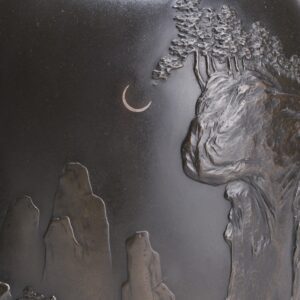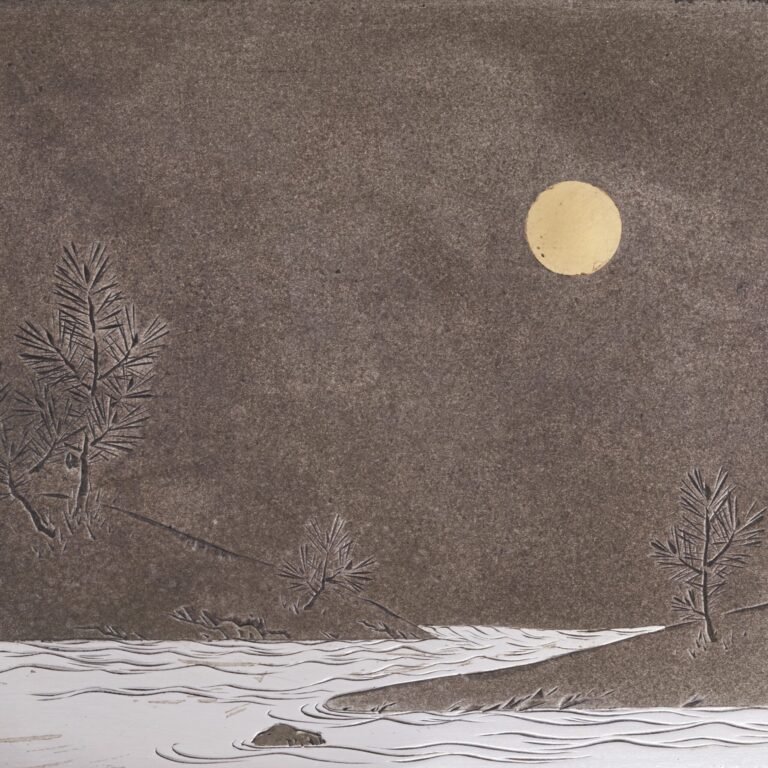
The recent adventures of the Artemis II crew captured the hearts and minds of millions of people around the world. Inspired by this new dawn of space exploration, we thought we’d take a look at the symbolic role the moon plays in Japanese culture. (As always with our blog posts, you can click on any image for a closer look.)
The moon, known as “Tsuki”, has been a source of inspiration and reflection for centuries. In Japan it is seen as a symbol of impermanence and subtle beauty. Rather than celebrating perfection or its brilliance alone, as is often the case, Japanese culture finds meaning in the fleeting and incomplete.
For example, a crescent moon or a partially obscured moon drifting behind clouds is considered more suggestive than a fully visible moon. The idea is that beauty is deeply rooted in its vulnerability and temporary nature.
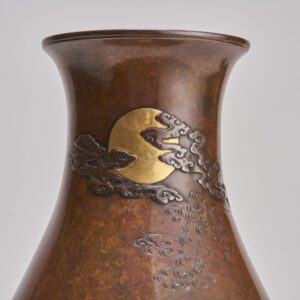
Another major aspect of Japanese life is seasonal awareness and this is something with which the moon is closely associated. During autumn, people gather to reflect and admire the harvest moon in the tradition of “Tsukimi” (Moon Viewing). Tradition similar to hanami (flower viewing in spring) and momijigari (maple leaf hunting in spring). You can read more about this Hanami By click here And Momijigari By click here.
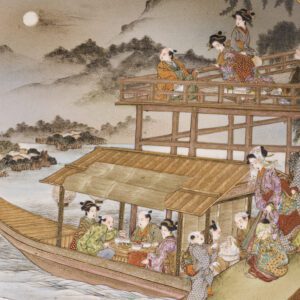
During Tsukimi, people will pluck pampas grass and make offerings of dango (rice dumplings) to express gratitude for nature’s abundance. The moon is believed to play an important role in a successful harvest, so it has become a symbol of harmony between mankind and the rhythms of the natural world.
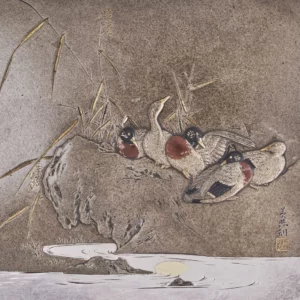
In literature and poetry, the moon is also used to express longing, solitude, and reflection. Its presence and eternal cycles are in contrast to the changing patterns and emotions of human life. Classical works such as The Tale of Genji (widely considered the world’s first novel) often use lunar imagery to depict and reflect romance, sadness, and the passing of time.
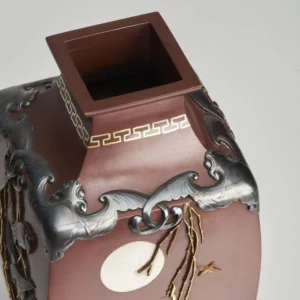
In Buddhism the moon is seen as representing wisdom and truth while in Shintoism it has a sacred significance. It is not so much a symbol of grandeur and power, the presence of the moon serves as a reminder to stop, reflect, and find the beauty in life.
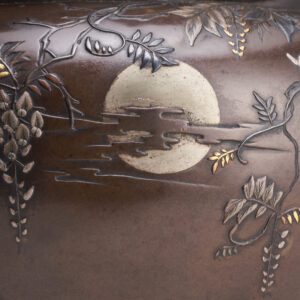
We hope you liked this article. You can find over 150 short stories and blogs inspired by our collection of Chinese and Japanese fine art and antiques. news page By clicking here.