
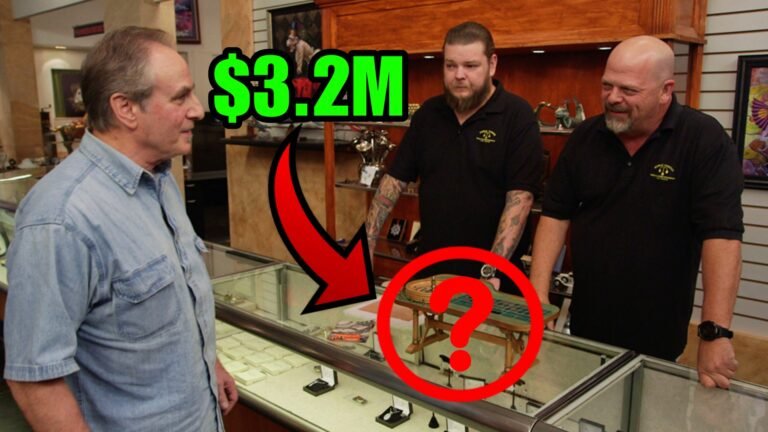
Pawn shops may seem like simple stores, but at the Gold & Silver Pawn Shop in Las Vegas, history, risk, and strategy collide every day. From Civil War buttons to Morgan silver dollars, Rick Harrison and his team have seen it all. Each item carries a story, and behind every price tag is a negotiation that could make or break the shop.
On any given day, customers walk in with treasures that range from priceless coins to historical letters. For Rick, it’s not just about buying—it’s about understanding the history, evaluating authenticity, and predicting the market. Sometimes, deals are made quickly, while other times, they require weeks of careful consideration.
Pawn Stars isn’t just a TV show—it’s a peek into a world where knowledge, timing, and instinct determine success. Some deals turn out to be life-changing, while others teach hard lessons.
Civil War Buttons: Small Items, Big History
One of the first highlights in our episode is a set of Civil War Navy buttons. At first glance, they may seem simple, but their history tells a different story. Dating back to the 1850s or early 1860s, these buttons were symbols of naval pride and service.
Cory examines them carefully, noting the eagle holding the anchor—a sign of authenticity. But with Civil War items, details matter. Different makers, slight design differences, and condition can affect the value dramatically. Cory calls in an expert to verify the buttons, confirming that they are indeed genuine Civil War relics.
Negotiation begins, with Cory offering $200 and the owner asking for $1,300. After careful consideration, a deal is struck at $500. While it’s a relatively small transaction compared to coins or cars, it showcases the importance of expertise and verification. Even minor items can carry significant historical value.
Morgan Silver Dollars: Rarity Meets Negotiation
Morgan silver dollars are among the most collected coins in the United States. When a seller brings one to the shop, Rick immediately recognizes its potential. The coin, named after its engraver, Morgan, has a beautiful design that appeals to collectors worldwide.
Rick calls an expert to assess its rarity. With only a limited number of certain minting errors existing, the value can be unpredictable. In this case, the coin features a huge die break, making it particularly valuable. The expert estimates the worth at $7,000, while the seller hopes for $15,000.
Negotiation is tough. Rick offers $4,500, but the seller refuses. The deal falls through, highlighting a recurring theme in Pawn Stars: not every item finds a buyer, no matter how rare it is. Collectors, sellers, and pawnbrokers must balance desire with reality.
Half Disme and Libertas Americana Coins: Millions in Rarity
A man brings two extremely rare coins to the shop: the half disme and the Libertas Americana. These coins are considered some of the first American coins ever minted. Benjamin Franklin had the half disme commissioned in France, and surviving gold examples were lost during the French Revolution.
The seller asks for a combined $800,000. Rick, stunned by the figure, calls in an expert. After examining their provenance, rarity, and historical importance, the expert suggests the half disme could fetch $500,000, and the Libertas Americana about $200,000.
Rick negotiates, mindful of both authenticity and market interest. The final deal closes at $150,000, a figure far below the seller’s asking price but still substantial. This transaction illustrates the high stakes involved in rare coin trading, where historical significance and collector demand dictate value.
1907 Saint-Gaudens Coin: A Lesson in Value
Next, a man brings a 1907 high-relief gold coin to the shop. Known for its intricate design and rarity, Saint-Gaudens coins are among the most sought-after pieces by collectors. Rick examines the coin, noting the uncirculated condition and fine detailing.
An expert evaluates the coin, estimating a value between $17,000 and $18,000. Rick starts the negotiation with a cautious offer of $12,500. The seller agrees, and the deal concludes successfully. This example emphasizes Rick’s strategy: understanding market value, consulting experts, and negotiating wisely.
1944 Steel Penny: A Coin That Shouldn’t Exist
One of the most intriguing items in the episode is a 1944 steel penny. Only about 30 exist, making it an accidental rarity. Unlike normal pennies, this one was struck from steel due to wartime metal shortages.
The seller hopes to get $102,000. Rick calls an expert, who estimates the coin could fetch around $30,000. Rick offers $25,000, but the seller declines, and no deal is made. Even with extreme rarity, pricing must match market reality. This case illustrates the balance between rarity, condition, and buyer willingness.
Ancient Greek Coin: History in Your Hands
Ancient coins bring unique challenges. A man walks in with a Greek silver coin, possibly decades or centuries old. Rick evaluates its quality, strike, and preservation, while an expert confirms its authenticity.
Estimated at $50,000, the coin is highly valuable. Rick negotiates a deal at $40,000, striking a successful purchase. Ancient coins are not just monetary assets—they are pieces of history, connecting collectors with civilizations long past.
1867 Shield Nickel: Proof Coins Are Priceless
A rare 1867 Shield nickel is brought into the shop. With only 25 known examples, this coin is a true collector’s gem. Proof coins, like this one, are polished and minted with extra care, ensuring minimal wear over decades.
Experts place its value between $60,000 and $80,000. Rick evaluates risk versus reward and decides the price is too high to justify a purchase. The deal falls through. In this instance, the show highlights Rick’s discipline: even rare items must meet financial sense.
Marilyn Monroe Memorabilia: Hollywood History
Beyond coins, the shop also deals in celebrity items. A signed Marilyn Monroe photograph comes in, but paperwork is missing. Cory calls an expert to verify authenticity. After examination, the item is confirmed as genuine, though no deal is made because of uncertainty about value.
Celebrity collectibles are often emotional purchases. Sellers may overestimate worth, while buyers seek historical or sentimental value. Verification and expert opinions are essential in ensuring fairness and authenticity.
Letters Signed by Historical Figures: Napoleon in the Shop
An ambitious collector brings a letter purportedly signed by Napoleon. Rick’s team evaluates its provenance, consulting experts to determine authenticity. While it appears genuine, further examination reveals it to be a replica.
No deal is made, but the process demonstrates how historical documents can be both fascinating and risky. In pawnbroking, verifying authenticity is crucial—fake or misrepresented items can be disastrous for both buyer and seller.
High-End Negotiations: Cars and Collectibles
Not all deals involve coins or documents. In one episode, Cory and Chumlee travel to inspect a 1976 Triumph motorcycle. They negotiate on behalf of Rick, testing performance and evaluating condition. Despite the seller’s asking price of $10,000, Cory hesitates, offering $7,200. Rick is displeased, teaching a lesson in loyalty and trust within the family business.
Vehicles, like coins, require careful inspection, market research, and strategic negotiation. Even high-value items can become a financial burden if not properly assessed.
Funny and Unpredictable Moments: Chumlee’s Lottery Ticket
Pawn Stars isn’t all serious business. Chumlee brings in a gag lottery ticket, fooling Cory and generating chaos. The fake $10,000 ticket teaches a lesson about impulse, gullibility, and humor in a high-stress environment. While the joke concludes with Chumlee returning to work, it reminds viewers that personality and entertainment are also central to the show’s charm.
Lessons From Pawn Stars
From Civil War buttons to Napoleon letters, Pawn Stars teaches several key lessons about collectibles and business:
- Knowledge is power – Understanding history, rarity, and market trends is essential.
- Expert opinions matter – Authentication can make or break a deal.
- Negotiation is an art – Knowing when to push and when to walk away ensures long-term success.
- Risk management is crucial – Even rare, valuable items carry financial and emotional risk.
- Patience pays off – Some items require months of waiting for the right buyer.
Whether dealing with coins, celebrity memorabilia, or vehicles, the core principles remain the same: research, verify, and negotiate wisely.
Conclusion: Why Pawn Stars Captivates the World
Pawn Stars is more than a TV show—it’s a real-life classroom in history, business, and negotiation. Every deal tells a story, every collectible carries heritage, and every negotiation reveals strategy. Rick Harrison and his team demonstrate that pawnbroking is not just buying and selling—it’s managing risk, understanding value, and appreciating the past.
For collectors, sellers, and fans alike, the show is a reminder that behind every rare coin, signed letter, or celebrity item lies a story worth exploring. Pawn Stars shows that the thrill isn’t just in the deal—it’s in discovering history, connecting with stories, and sometimes, almost losing it all to gain something priceless.